Family camping
Family Camping for Beginners
Everything you need to take your family camping for the first time - from picking the right site to keeping everyone fed, warm, and happy enough to come back.
By William Blacklock · Last updated April 2026


Why most families overcomplicate this
The internet search for “family camping gear list” will return 200-item spreadsheets, $400 camp kitchens, and photos of setups that took four hours to build. None of that is required for a good first trip. The families that have the worst time are usually the ones who over-researched and over-geared. They arrive exhausted, overwhelmed by their own logistics, and convinced camping is a production.
The families who keep coming back started simple. One tent. Sleeping bags. A basic stove. Hot dogs over the fire. That's a successful first family camping trip.
This guide follows that principle: what you actually need, in the order you need to figure it out.
Step 1: Pick the right first campsite
The campsite you pick determines more about whether your first family trip succeeds than any gear decision. For your first trip, all of these conditions should be true:
- Drive-up access. You park your car next to the site. No hiking gear in. With kids, this is non-negotiable for trip one.
- Flush toilets. Vault toilets and pit toilets work, but they're a harder adjustment for kids. Flush toilets remove one friction point.
- Within 90 minutes of home. When something goes wrong - and something will - you want to be able to cut the trip short without a 4-hour drive. Being close also means you forgot the sleeping pads isn't a disaster.
- A camp host on site. State parks typically have a camp host who can answer questions, help with site issues, and provide a non-emergency safety net.
- Electric hookups optional but nice. If available, a powered site lets you bring a fan for white noise (kids sleep better) and keep phones charged for safety.
State parks are the answer for first-time family camping in almost every region of the United States. They're well-maintained, have consistent amenities, typically cost $25-40 per night, and you can browse and book them on Reserve America or your state's parks website.
Avoid first-trip mistakes: national park campgrounds book out months in advance and have more crowds; dispersed camping on national forest land requires knowing where water is and managing your own waste; private campgrounds can be comfortable but vary wildly in quality. For trip one, stick to a state park.
Step 2: Book far enough in advance
State park campsites in populated areas sell out on weekends, often months ahead. If you are planning a spring or summer trip near a metro area, check the reservation window. Most state park systems open reservations 6 months in advance. Popular sites on holiday weekends book within hours.
Midweek trips (Tuesday through Thursday night) are almost always available last-minute and are significantly quieter. If your schedule allows, a midweek first trip means less noise, more space between sites, and a more relaxed atmosphere for new campers.
Book two nights for your first trip if the kids are old enough (5+). Night one is harder. Night two is easier. Leaving after night one means you only ever experienced the hard part.
Step 3: The actual gear you need
For a family of four on a first car camping trip, you need exactly this:
Shelter
- Tent - one size up from headcount. A family of four should bring a 6-person tent. The extra floor space fits gear, gives kids room to move around inside, and prevents the feeling of sleeping in a closet. Freestanding dome or cabin tents both work; cabin tents are easier to stand up in but harder to pitch in wind.
- Sleeping bags for every person. Rated at least 10°F below the forecast low for the coldest night. Kids should have kid-sized bags - adult bags are too long and kids lose body heat in the empty foot space.
- Sleeping pads or air mattresses. Cold ground pulls heat from a sleeping bag much faster than cold air. Even in summer, a pad matters. Foam pads are cheap and never deflate; self-inflating pads balance comfort and packability.
- Tarp or canopy (optional on trip 1). Useful if rain is in the forecast or for afternoon shade. Skip for trip one unless the forecast calls for rain.
Cooking and food
- Two-burner propane stove. The most useful piece of camp cooking gear for families. You can make coffee and cook eggs simultaneously. A Coleman two-burner or equivalent is the standard starting point.
- Lighter and fire-starting materials. Even if you plan to cook on a stove, the campfire is the center of family camp life. Bring a long-reach lighter, newspaper or firestarter bricks, and know whether the site allows fires before packing firewood.
- Cooler - larger than you think you need. A 50-quart cooler is the minimum for a family of four on a two-night trip. Ice management is the main campsite chore - keep drinks in a separate small cooler so the food cooler stays sealed and cold.
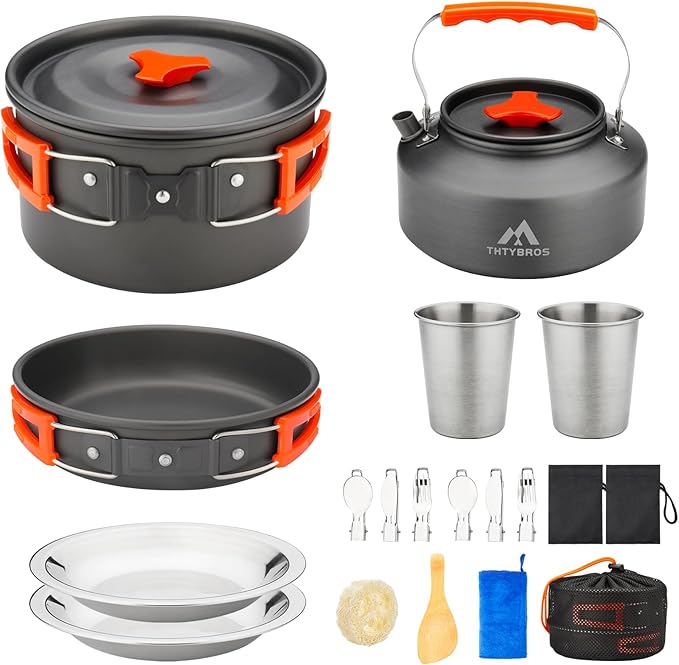
- Camp pots, pans, and utensils. One medium pot, one 10-inch skillet, a camp spatula, and a ladle covers almost every camp meal. Stainless steel or cast iron both work; cast iron is heavy but holds heat for campfire cooking.
- Biodegradable dish soap, a wash basin, and a drying towel. Keep used water at least 200 feet from any water source when disposing.
Safety and comfort
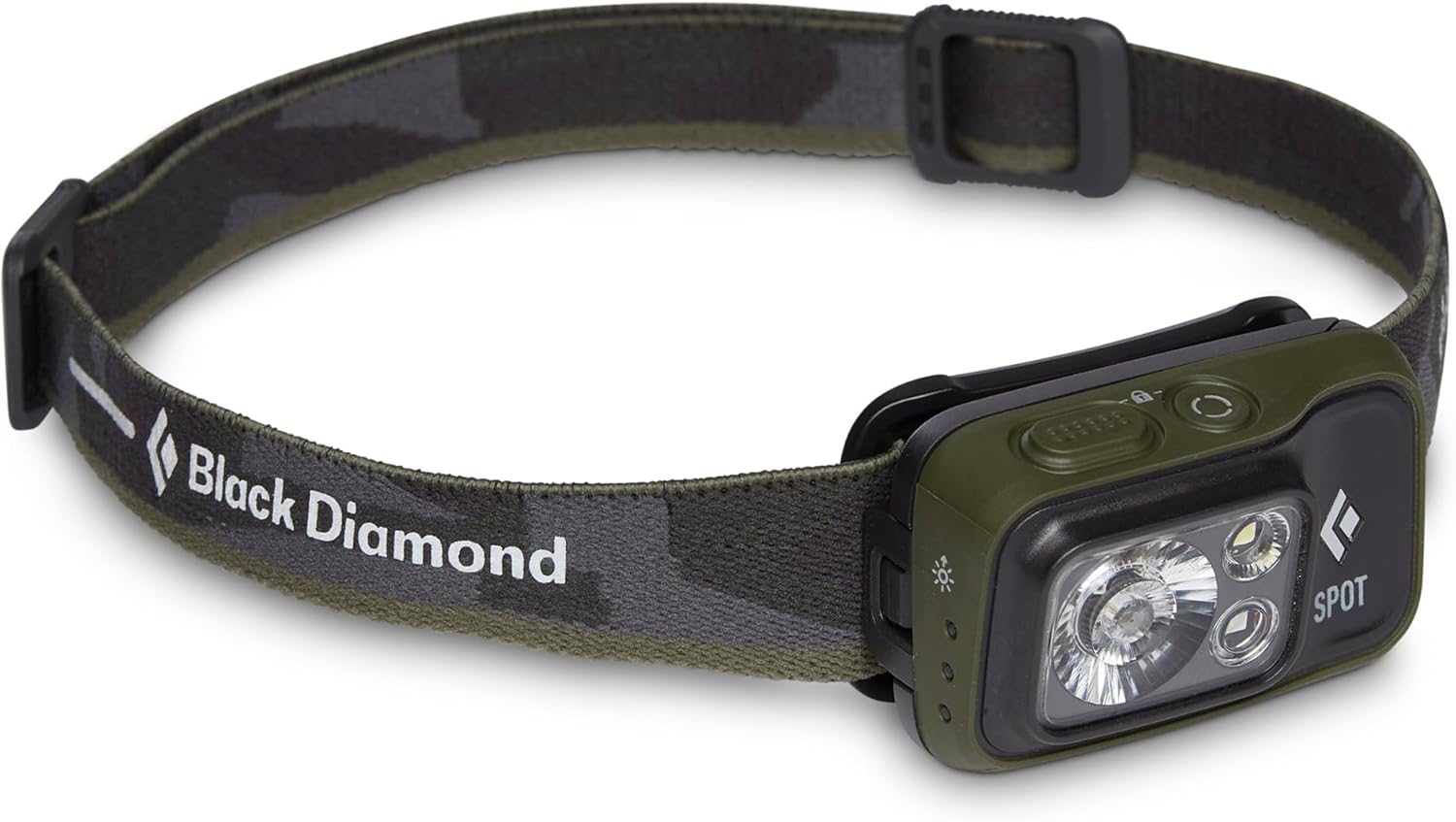
- One headlamp per person. Flashlights are harder for kids to manage hands-free. Every person needs their own headlamp. Buy extras - they disappear.
- A camp lantern. For the table and tent interior. LED lanterns run for days on batteries and are safer around kids than propane lanterns.
- First aid kit. Bandages, antiseptic wipes, tweezers (ticks), moleskin (blisters), ibuprofen and children's acetaminophen, and any family-specific medications.
- Bug spray and sunscreen. Both. Reapply both. DEET or picaridin for bugs if you are in tick country.
- Camp chairs. One per person. Kids sit more willingly and melt down less when they have their own chair.
What to leave home on trip one
- Camp kitchen organizers
- Fancy camp coffee setups
- Camp hammock (always a fight over who gets in it)
- Cast iron Dutch oven (wonderful, but heavy and not needed yet)
- Everything sold as “camp organization systems”
Step 4: Plan activities before you arrive
This is the step most first-time family campers skip. The biggest mistake in family camping is expecting nature to auto-entertain kids. It doesn't. A bored 7-year-old at a campsite with nothing to do will make sure everyone knows about it.
The formula that works: three structured activities per day - morning, afternoon, evening. Not elaborate, not expensive. Just planned.
- Morning: A nature walk with a printed scavenger hunt list. “Find a feather, find three different-colored rocks, spot a bird.” The list is the game - kids who are hunting for things stay engaged longer than kids just walking a trail.
- Afternoon: Something quiet at the site. Bark rubbings with crayons and paper. Rock painting with small watercolor sets. Reading in the tent. Building a fairy house from sticks and leaves.
- Evening: The campfire. S'mores, a story, songs, or a round of campfire games. The fire handles the entertainment - your job is just to keep it going.
For a fuller list of activities organized by age, energy level, and whether it's raining, see the camping activities for kids guide.
Step 5: The food plan
Camp food should be simple, familiar, and abundant. First-time family camping is not the moment to debut dehydrated backpacking meals or try new recipes. Bring food you know your kids will eat, and over-pack snacks by a significant margin. Hunger is the most common cause of meltdowns at camp, and snacks are cheaper than the drive home.
A proven first-trip meal plan
- Day 1 dinner (arrive tired): Hot dogs or sausages over the fire or on the grill. Side of pre-cut vegetables or chips. This is not a meal worth planning - cook it in 15 minutes and move on.
- Day 2 breakfast: Scrambled eggs with bacon on the two-burner stove. Coffee for adults, hot chocolate or juice for kids. One of the best camp meals because the morning air makes it taste better.
- Day 2 lunch: Sandwiches from the cooler. PB&J, deli meat, whatever the kids will eat reliably. No cooking needed in the middle of the day.
- Day 2 dinner: Foil packet meals. Each person's protein and vegetables wrapped in aluminum foil, cooked on the grill grate over the fire. 30 minutes, no dishes. Chicken thighs, potatoes, and onions is a reliable version.
- Day 3 breakfast (pack-out day): Cereal with boxed milk. Granola bars. Anything that requires no cooking so you can focus on breaking camp.
Snack packing rule
Bring twice what you think you need. Camp kids burn more energy than home kids, ask for snacks constantly, and the one time you don't have the right snack will coincide exactly with the moment someone is losing it at 4pm. Trail mix, fruit pouches, string cheese, crackers, and the one special treat you only get at camp (Oreos, Pringles, whatever yours is) are the standards.
Step 6: Sleep setup for kids
Night one at camp is almost always rougher than night one at home. Everything is unfamiliar: the sounds, the temperature shifts, the sleeping bag, the ground. Plan for this and don't panic when it happens.
- Keep the bedtime ritual the same as home. Same book. Same songs. Same order. Familiar routines lower anxiety in unfamiliar environments.
- Bring a small battery-powered fan. White noise masks camp sounds - other campers, animals, wind in trees - and helps kids sleep longer. This is the single highest-impact sleep intervention for camp with kids.
- Give every kid a glow stick or small tap light. The fear of total pitch-black darkness in an unfamiliar place is real for kids. A dim light inside the tent takes that fear off the table.
- Wear them out before dinner. A 4 or 5pm hike, game of frisbee, or playground visit ensures kids are genuinely tired at bedtime. Camp kids who aren't tired enough will explore the tent zippers for an hour.
- Go to bed earlier than you would at home. The camp rhythm runs earlier - sunrise happens, sounds happen, and there's not much to do after dark. Fighting the early bedtime loses.
Night two is almost always fine. Build your expectations around that reality rather than writing off camp after a rough first night.
What to do when things go wrong
Things go wrong on every first family camping trip. The framing that helps: expect one hard hour per day and plan around it instead of hoping it doesn't happen.
- Rain: It changes the trip, not ruins it. Tarps for the cooking area, a downloaded movie for inside-the-tent time, puddles and mud as the activity. Kids who dress for it often love rainy camping. See the camping when the weather turns guide for setup specifics.
- A kid who won't sleep: Let them read in their sleeping bag with a small light. Don't turn the whole tent into a crisis. Some kids need two nights to adjust.
- Cold kids: Add layers before they complain, not after. Kids signal cold by getting quiet and withdrawn, not by saying they're cold. Beanie, fleece, dry socks, and proximity to the fire resolves most cases. If a child can't warm up after 20 minutes near the fire, go home.
- Forgotten gear: The closer you are to home, the easier this is. What you can almost always find at a nearby gas station or Walmart: firewood, ice, batteries, basic food, and a tarp. Keep that option open by staying within 90 minutes.
- The trip-ending call: A sick child with a fever, a child who genuinely cannot sleep for two nights, or a safety concern with weather. These are real reasons to go home. The goal is a memory your family wants to repeat, not an endurance test.
The first-trip success formula
Success on a first family camping trip is not “everything went smoothly.” It's “everyone wants to come back.” Those are different targets, and the second one is achievable even with rain, rough sleep, and forgotten marshmallows.
The trips that produce “when can we go again?” have a few things in common:
- The trip was short enough that nobody got to the relief-to-be-home stage.
- Each kid had at least one moment that was clearly theirs - a rock they found, a fire they helped build, a s'more they made themselves.
- There was at least one special treat that only happens at camp.
- The adults modeled “this is fun” rather than “this is exhausting,” even when it was a little exhausting.
If you want a structured plan matched to your family's ages and situation - one that includes a timeline, gear list, meal ideas, and a day-by-day activity schedule - take the 2-minute quiz. We'll match you to the right starter plan.
Building toward longer trips
The progression most successful camping families follow:
- Backyard test night - Pitch the tent in the yard, sleep in it one night. Shakes out gear issues, gets kids excited, costs nothing.
- First Night Camp - One night at a nearby state park. Low stakes, easy bail-out.
- First Weekend Camp - Two nights, a day hike, a second breakfast at camp.
- Easy Family Basecamp - Three nights, real camp rhythm, kids with camp jobs, evenings around the fire.
Each step builds the skills, gear knowledge, and family camping confidence that makes the next one easier. Most families skip the backyard test and pay for it at the campsite. Don't skip the backyard test.
Frequently asked
Where should a family go camping for the first time?
A state park within 90 minutes of home with drive-up sites and flush toilets. Book through Reserve America or your state parks website. Midweek trips are easier to book and quieter.
What gear does a family need for their first camping trip?
A tent one size up from headcount, sleeping bags rated 10°F below the forecast low, sleeping pads, a two-burner stove, a cooler, headlamps for every person, and a camp lantern. That is the complete minimum for a comfortable trip.
How do you keep kids entertained while camping?
Plan three activities before you leave: a morning nature walk with a scavenger hunt, an afternoon quiet activity at the site, and an evening campfire. Bring a printed scavenger hunt list and one craft activity. The fire handles the evening.
How long should a first family camping trip be?
One night for kids under 5. Two nights for kids 5 and up. Keep it short so everyone leaves wanting more.
How do you keep a family tent warm at night?
Sleeping pads insulate from cold ground - this matters more than the bag. Add a kid-sized sleeping bag rated 10°F below forecast, plus long underwear and a fleece inside the bag.
Is family camping expensive?
Gear investment of $300-600 for a family of four, then $25-45 per night for the site. Food costs no more than a trip at home. After year one, it's one of the cheapest family vacations.