Montana
Camping in Montana for Beginners
Glacier, grizzlies, a summer that barely clears three months, and an August smoke season nobody warns you about.
By William Blacklock · Last updated April 2026


What camping in Montana is actually like
- Enormous and empty. Fourth-largest state, seventh-least populous. Services are far apart, and a two-hour drive between towns is normal.
- A short mountain season. Late June to mid-September in the high country. Snow lingers on passes into July and returns in September.
- Two Montanas. The west is mountains, lakes, and dense forest. The east is prairie and badlands, hotter, drier, and far less visited.
- Beginner focus: a state park or national forest campground in July or August, ideally on water, with Glacier as a day trip rather than a first basecamp.
What's different about camping in Montana
Glacier access rules change almost every year
- For 2026, no vehicle reservation is required to drive Going-to-the-Sun Road. You still need a park entrance pass.
- Logan Pass parking is limited to three hours, and the Going-to-the-Sun shuttle runs reservation-only, with next-day reservations released daily on recreation.gov.
- Going-to-the-Sun Road opens in full only after the alpine section is cleared, usually late June or early July. Do not plan a June trip around driving it end to end.
- Because this has changed nearly every season, check nps.gov/glac in the week before you travel rather than trusting an article, including this one.
Grizzly protocol in the west
- Glacier, the Bob Marshall, and much of northwest Montana are grizzly country as well as black bear country.
- Bear spray on your hip, not in the pack. Buy it after you land, because you cannot fly with it.
- All food, coolers, trash, dishes, and toiletries go in the bear box or the hard-sided vehicle. Nothing scented in the tent.
- Make noise on trails, especially near streams and in brush where sightlines are short.
Wildfire smoke is a real August variable
- Smoke from regional fires settles into western valleys and can hold for days, pushing air quality into unhealthy ranges.
- Check airnow.gov for air quality and InciWeb for active fires in the days before you leave.
- This matters most for kids, older adults, and anyone with asthma. Have a bail plan and a backup destination east or north.
- Fire restrictions and full campfire bans are common in late summer. Bring a stove and treat a campfire as a bonus.
Weather swings hard
- A 30 to 40 degree spread between afternoon high and overnight low is normal in the mountains.
- Snow is possible at elevation in any month. July hail and a cold front in August both happen.
- Cell coverage is poor across much of the state and largely absent inside Glacier. Download offline maps and tell someone your plan.

Best setup for your first trip in Montana
Three beginner trip types that work here, mapped to plans on this site. Pick the smallest one you have not done yet, or take the 5-second quiz and we will match one to your dates and party size. If your dates land in late summer, camping when the weather turns covers making the call to leave.
- Backyard Test. Do it on a cold night. Montana's failure mode is a 35°F morning at a site three hours from a store, and that is a bad place to discover your sleeping bag is thin.
- First Night Camp. One night at a Montana state park on water. Flathead Lake units, or Lewis and Clark Caverns if you want a built-in activity. Easy booking, real facilities, no bear box protocol to learn on night one.
- Easy Family Basecamp. Two or three nights at a Flathead National Forest campground outside the park boundary, day-tripping into Glacier. Easier to book than in-park sites, cheaper, and usually quieter.
Where beginners should look
Montana state parks
The sensible first trip. The units around Flathead Lake, including Wayfarers, Yellow Bay, and Finley Point, give you swimmable water, warmth, and real facilities within reach of Kalispell and Glacier. Lewis and Clark Caverns between Butte and Bozeman pairs a good campground with a genuinely worthwhile cave tour. Makoshika in eastern Montana is badlands country, hot and dry and almost empty, and a completely different trip. Park details are at stateparks.mt.gov with reservations through montanastateparks.reserveamerica.com.
Glacier National Park
Reservable campgrounds run through recreation.gov and include Apgar, Fish Creek, Many Glacier, St. Mary, and Two Medicine. Many Glacier is the hardest to get and the one most people want. Some campgrounds still operate on a first-come or partly first-come basis, and which ones changes between seasons, so confirm at nps.gov/glac. Remember that the park is large and slow to drive: St. Mary to Many Glacier is not a quick hop, and Going-to-the-Sun Road is a scenic drive, not a shortcut.
National forests
The Flathead, Lolo, Custer Gallatin, and Bitterroot national forests hold hundreds of developed campgrounds, most of them cheap and many first-come. Dispersed camping is free and permitted across large areas. This is the realistic answer when Glacier is booked and the honest answer for anyone who wants quiet. Bear rules still apply everywhere, minus the provided bear box, so you supply the hard-sided storage yourself. Our guide to dispersed camping on BLM and national forest land covers the basics.

What to bring (for Montana)
Start from a normal beginner packing list, then adjust:
Add
- A 20°F or warmer sleeping bag and an insulated pad. Mountain nights near freezing happen in July.
- Bear spray, bought locally, worn on your hip. Plus a hard-sided container or the discipline to use the car.
- Layers rather than one heavy coat. A 35-degree swing between afternoon and night is normal.
- A stove you can rely on, because late-summer fire bans are common.
- N95 or KN95 masks if anyone in the group has asthma and you are traveling in August or September.
- Offline maps and a full tank. Cell service disappears for long stretches.
- Sunscreen and sunglasses. High-elevation sun is strong even when the air is cold.
Skip or downsize
- Heavy shade canopies. Wind and afternoon storms make them more trouble than they are worth at most sites.
- Big bug kits. Mosquitoes show up near water in early summer but are a secondary concern.
- Anything scented you do not need. Every extra bottle is one more thing that has to live in the car overnight.
Common first-time mistakes in Montana
- Planning a June trip around Going-to-the-Sun Road. The alpine section usually does not open until late June or early July. People book the trip, arrive, and find the road closed at Avalanche Creek.
- Assuming last year's Glacier entry rules still apply. They have changed nearly every season. In 2026 there is no vehicle reservation, but Logan Pass parking is capped and the shuttle needs a reservation. Check the park site the week you travel.
- Ignoring the smoke forecast. August and September trips can land in genuinely unhealthy air. Check airnow.gov before you leave and keep a backup destination in mind.
- Keeping snacks in the tent. In grizzly country this is the mistake that matters most. Everything scented goes in the bear box or the car, including during the day.
- Underestimating drive times. Montana distances are deceptive on a map. Budget more hours than the estimate, and fill the tank whenever you pass a station.
Simple gear setup for Montana
A working starter kit calibrated for Montana: cold mountain nights, big temperature swings, and bear country discipline.
- Tent. Kelty Wireless 6 (~$280). A full-coverage rainfly and pre-attached guylines earn their keep in mountain wind and a surprise August storm.
- Sleeping bag. Marmot Mad River 0 (~$150). A 0°F bag is reasonable for high-country Montana, even in midsummer.
- Sleeping pad. MondoKing 3D Self-Inflating Pad (~$200). High R-value, because the ground is what makes you cold at elevation.
- Stove. Coleman Triton+ 2-Burner Propane Stove (~$85). Assume you will be cooking under a fire ban at some point in August.
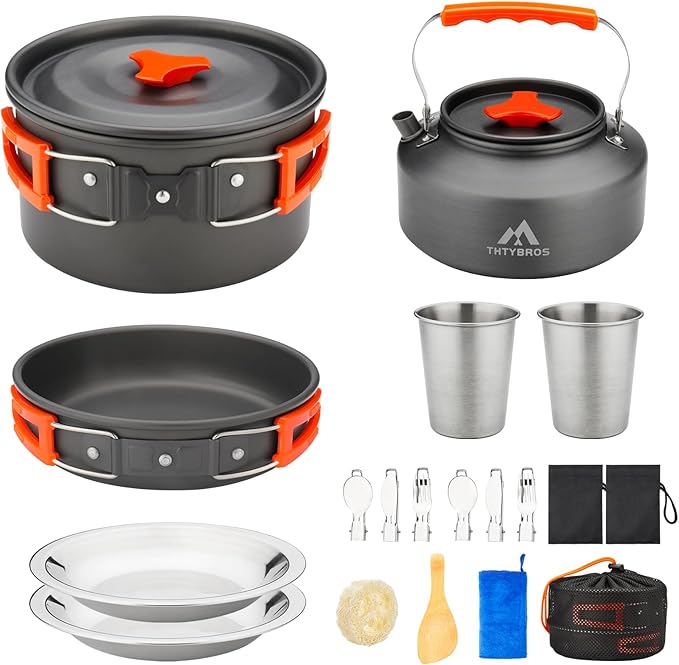
- Cookware. THTYBROS 17-Piece Camping Cookware Mess Kit (~$40). Washed and stowed before dark, not left out overnight.
- Hand warmers. HotHands Hand Warmers, 40 Pairs (~$25). Cheap insurance for the first cold morning.
- Power bank. Anker Zolo Power Bank, 20,000mAh (~$35). Offline maps and a dead phone are a bad combination out here.
- Bear spray. Buy it in Kalispell, Missoula, or Bozeman. On your hip, not in the tent, and know how the safety works before you need it.
Frequently asked
When is the best time to camp in Montana?
Late June through mid-September in the mountains, with July and August the dependable stretch. Valleys and eastern Montana run longer. Late summer brings wildfire smoke as the main trade-off.
Do I need a vehicle reservation for Glacier?
Not in 2026 - the park suspended the requirement, though you still need an entrance pass. Logan Pass parking is capped at three hours and the shuttle is reservation-only. Confirm at nps.gov/glac, because this changes almost every year.
Is Montana grizzly country?
Western Montana is. Bear spray on your body, and all food, trash, and toiletries in a bear box or hard-sided vehicle. Nothing scented in the tent, ever.
How do I book a campsite in Glacier?
Reservable campgrounds are on recreation.gov, including Apgar, Fish Creek, Many Glacier, St. Mary, and Two Medicine. Many Glacier is the hardest. Check nps.gov/glac for which sites are first-come this season.
How bad is wildfire smoke?
A real August and September factor, not a rare event. Smoke settles into western valleys for days at a time. Check airnow.gov and InciWeb before you leave, and expect fire restrictions.
Where should a Montana first-timer camp?
A state park or national forest campground rather than inside Glacier. Flathead Lake units, Lewis and Clark Caverns, or Makoshika in the east are all easier places to learn your gear.