Fire restrictions
Camping During a Burn Ban
A burn ban does not cancel the trip. It changes how you cook, how you stay warm, and what the kids do after dark, and all three are easier to solve at home than at the campsite.
By William Blacklock · Last updated April 2026


Why fall brings burn bans
Most families think of fire season as a summer problem, but in much of the country the riskiest stretch runs from late summer into fall. Grasses and leaf litter have dried out, rain is scarce, and fall cold fronts bring strong, gusty winds. Across the Southeast, Texas, the Great Plains, and California, October and November are prime time for county burn bans and agency fire restrictions, often landing right on a long weekend you already booked.
The good news is that a fire restriction is a rule change, not a closure. Campgrounds stay open, trails stay open, and the trip still works. What changes is everything you were going to do around the campfire.
What Stage 1 and Stage 2 restrictions usually mean
Federal land managers and many states use a staged system. The exact wording differs from one forest, park, or county to the next, but the general pattern looks like this:
- Stage 1. Wood and charcoal fires are banned everywhere except inside agency-provided fire rings or grills at developed campgrounds. Dispersed campers lose their fire entirely. Smoking is usually limited to vehicles and developed sites.
- Stage 2. All wood and charcoal fires are banned everywhere, including the metal ring at your reserved campground site. Some orders also restrict chainsaws, generators without spark arrestors, and other spark sources.
- County burn bans. Separate from agency stages, counties issue their own bans that often apply to private campgrounds and RV parks inside the county lines. A private campground can still be under a ban even if the nearby national forest is not.
Under both stages, most orders still allow stoves, lanterns, and heaters that run on pressurized gas or liquid fuel and have a shutoff valve. That single exemption is what keeps a burn-ban trip comfortable. Violating a fire order is a real citation with a real fine, and if your fire escapes, you can be billed for the cost of putting it out.
How to check before you go
Fire restrictions can change in a day, so check twice:
- A few days out, look up the land manager running your campground, whether that is a national forest, BLM field office, state park, or county park. Their alerts page or fire restrictions page lists current orders and what they allow.
- Check the county too, especially for private campgrounds. Many counties post burn ban status on their emergency management page.
- The morning you drive, check again, then ask the campground host when you arrive. Hosts know about new orders before the signs go up.
If you are heading to dispersed sites on public land, this matters even more, since Stage 1 alone takes away your fire. Dispersed camping on BLM and national forest land covers how those rules work in general.
Cooking without a campfire
A propane camp stove is the backbone of a burn-ban trip. A compact single burner such as the Coleman 1-Burner Propane Stove boils water for oatmeal and hot cocoa, and a two-burner like the Coleman Triton+ 2-Burner Propane Stove handles a full family dinner. Set the stove on a picnic table or a cleared gravel pad, away from dry grass, and keep a full water jug within reach while it runs.
Plan the menu around the stove instead of trying to adapt campfire recipes. Foil packets, roasting sticks, and dutch-oven coals are out. One-pot pastas, quesadillas in a skillet, breakfast burritos, and chili all work beautifully on a burner. Charcoal grills are banned in nearly every order alongside campfires, so leave the briquettes at home. For stove-friendly ideas, see easy family camping meals, and if you want to skip cooking for a night, no-cook camping meals for kids fills the gap.
S'mores are the part kids will ask about. You can toast marshmallows carefully over a stove burner on a long roasting stick, or skip the toasting and make "s'mores dip" in a small skillet with chocolate chips and marshmallows on low heat. It is not the same as a campfire, but it saves the evening ritual.
Propane fire pits: often allowed, never assumed
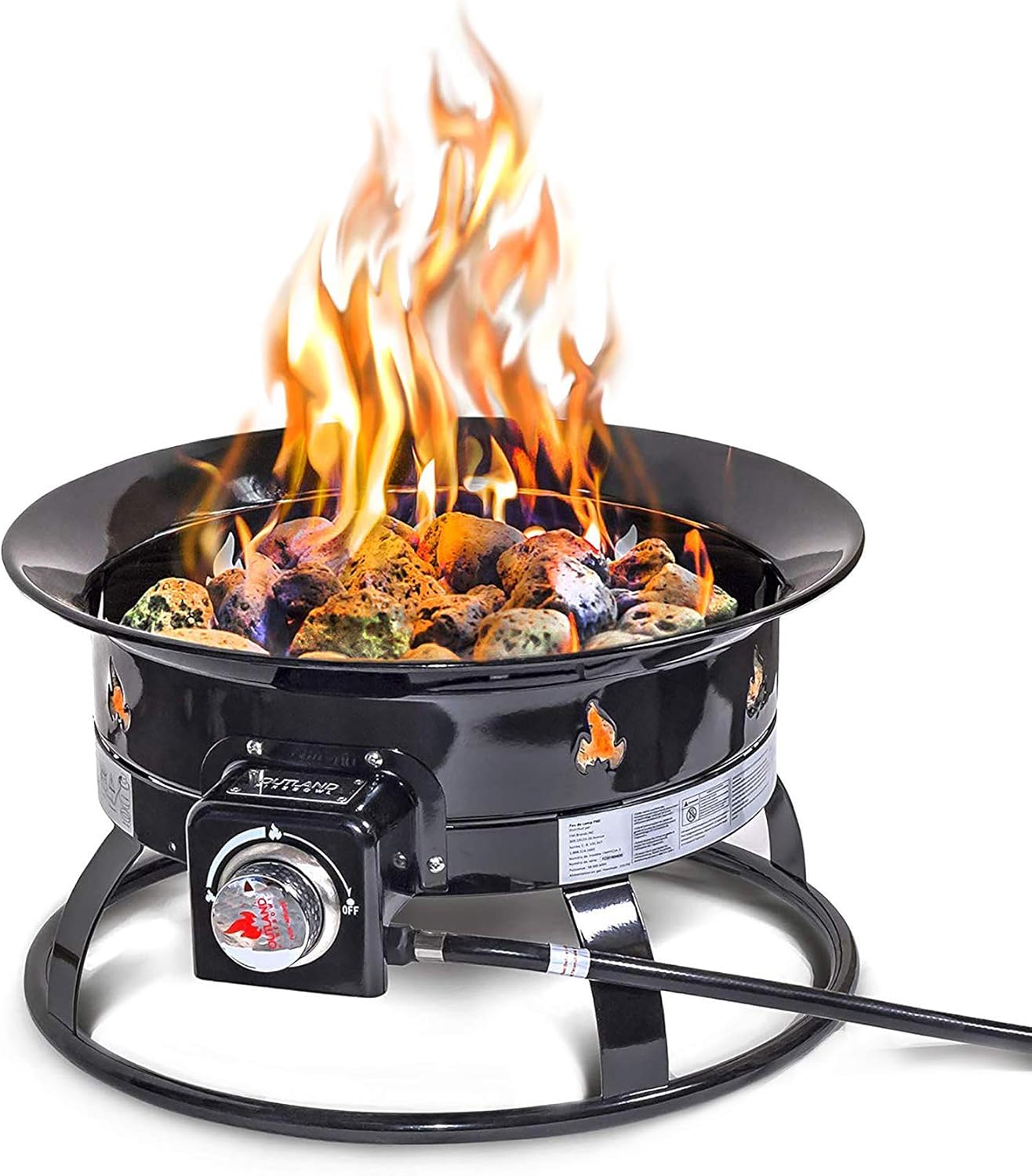
A portable propane fire pit gives you the glow and warmth of a campfire with no embers and an instant off switch. Many Stage 1 and Stage 2 orders allow them under the same shutoff-valve exemption that covers stoves, which is why they have become a favorite for fall camping. A well-reviewed option is the Outland Living Firebowl 893 Deluxe Propane Fire Pit, which runs on a standard 20-pound tank and packs into its own carry kit.
The catch: some agencies specifically list portable propane campfires as prohibited, particularly under the strictest stages, and some campgrounds ban them on their own. Read the order for wording about devices fueled by liquid petroleum or LPG with a shutoff valve. If the order does not clearly allow them, or the host says no, the fire pit stays in the car. Even where they are allowed, keep kids an arm's length back, set it on bare ground or gravel, and turn it off before anyone heads to bed.
Staying warm without a fire
In fall, the campfire does a lot of quiet work keeping everyone warm between dinner and bed. Without it, plan warmth into the clothing instead. Put kids in a fleece or puffy layer, a hat, and dry socks as soon as the sun drops, before they get cold rather than after. Hand warmers like HotHands Hand Warmers, 40 Pairs in pockets help a lot during the evening hang-out. A hot drink made on the stove does double duty as warmth and as a bedtime ritual.
The shortened evening is also a reason to move bedtime earlier than usual. Kids get cold fastest when they are sitting still in the dark, and a warm sleeping bag beats a cold camp chair. How to keep kids warm camping walks through the full cold-night sleep setup.
Never bring a stove, grill, or any fuel-burning heater into a tent to make up for the missing fire. Carbon monoxide builds up fast in an enclosed space, and it is odorless.
Making a no-campfire night fun for kids
The campfire is the natural gathering point, so without one you need a different center. Hang a bright lantern such as the LuminAID Titan 2-in-1 Solar Lantern over the picnic table and make that the hub. Then give the evening a plan:
- Glow sticks. A pack of PartySticks Glow Sticks, 100-Pack turns into glow-in-the-dark ring toss, flashlight tag markers, and necklaces that make kids easy to spot.
- Stargazing. No firelight means darker skies and better stars. Lay out a blanket and let your eyes adjust for 15 minutes.
- Card games and trivia at the lantern-lit table.
- Headlamp night hike on a short, familiar loop, with a headlamp for every kid.
- Stories anyway. Circle the camp chairs around the lantern and tell them. Kids care about the story far more than the flames.
For more after-dark ideas, see camping after dark with kids. If you were planning to teach the kids fire-building this trip, save it for a wetter weekend; our how to start a campfire guide will be there when the ban lifts.
Other fire-safety habits during a ban
- Park on gravel or dirt, never on tall dry grass. A hot exhaust system or catalytic converter can ignite it.
- Watch for dragging chains on trailers, which throw sparks along the road.
- No fireworks, ever, but especially not now.
- Know your exits. On very windy, dry days, note the campground's way out and keep the car loaded enough to leave quickly if a fire is reported nearby.
Frequently asked
Can I still cook at my campsite during a burn ban?
Almost always. Propane and liquid-fuel stoves with an on/off valve are exempt from nearly every order. Charcoal grills are usually banned, so cook on a stove set on a cleared, non-flammable surface.
Are propane fire pits allowed during a burn ban?
Often, but not always. Many orders allow them under the shutoff-valve exemption, and some specifically prohibit portable propane campfires. If the order does not clearly allow one, leave it in the car.
What is the difference between Stage 1 and Stage 2 fire restrictions?
Stage 1 usually allows wood fires only in agency fire rings at developed campgrounds. Stage 2 usually bans wood and charcoal fires everywhere, including those rings. Gas stoves with a shutoff valve are typically allowed under both.
How do I find out if there is a burn ban where I am camping?
Check the land manager's fire restrictions page, the county's burn ban status, and the campground host on arrival. Check again the morning you drive, since orders can change in a day.


