After dark
Camping After Dark With Kids
In July the dark is a half-hour problem. By late October it is a five-hour block of the trip, and it arrives while you are still cooking. Here is how to light a family campsite and what to do with all that evening.
By William Blacklock · Last updated September 2026


The daylight math nobody plans for
Families build their camping instincts in June and July, when the sun is still up at 8:30pm and bedtime happens in twilight. Those instincts stop working in September, and they fail badly by late October. Across most of the lower 48, sunset slides from roughly 8pm in mid-August, to about 7pm at the equinox, to around 6:15pm by the last weekend of October. Then the clocks fall back on the first Sunday in November and sunset lands nearer 5pm.
Run the arithmetic against a kid bedtime of 8:30pm and the shape of the problem is obvious:
- Mid-July trip: dark at about 9pm. There is no evening to manage. Kids go to bed roughly when the light goes.
- Late-September trip: dark at about 7:30pm. One hour to fill, mostly spent on cleanup.
- Late-October trip: dark at about 6:45pm. Nearly two hours after dinner with nothing scheduled.
- Early-November trip, after the time change: dark at about 5:30pm. Three hours of full darkness before bedtime, starting before most families have finished cooking.
Nothing about that is a problem if you plan for it. It only becomes one when you show up with a July schedule and a single lantern.
Move the entire day forward
The single highest-leverage change is a clock change, not a gear change. Shift every part of the day about two hours earlier than your summer version.
- Arrive by 3pm. Not 5pm. Pitching a family tent, sorting sleeping bags, and finding the bathhouse are all daylight jobs, and doing them under headlamps with tired kids is where fall trips go wrong. If you are new to the setup itself, walk through how to set up a family tent before you are doing it in the cold.
- Get firewood before dark. The camp store closes early in the shoulder season, sometimes at 5pm, and hunting for wood at 7pm means driving out of the park. Buy it on the way in.
- Start dinner before sunset, not at sunset. Cooking is the task that punishes darkness hardest: cold hands, a two-burner stove, and kids underfoot in the dark. Aim to be eating by 6pm in October.
- Keep the menu to one pot. A three-component meal that works fine in July becomes a 45-minute headlamp exercise in October. This is the trip for chili, pasta, or foil packets. Our easy family camping meals list is sorted for exactly this constraint.
- Do the dishes immediately. Warm water and a lit table are both easier at 6:30pm than at 9pm, and leaving it means doing it in the dark with a cold water spigot.
Light the campsite in three layers
Most families buy one lantern and stop, then spend the evening crowded around the one lit object at the site. A campsite needs three different kinds of light because it has three different jobs to do.
Area light: one lantern, hung high
The lantern makes the picnic table usable. The detail that matters is height: a lantern sitting on the table shines straight into everyone's eyes and lights nothing below waist level. Hang it above head height from a tarp pole, a tree branch, or a clamp-on hanger, and the whole table lights evenly with no glare. A second small lantern inside the tent, left on low, is worth its weight the first time someone needs to find a sock at 10pm.
Task light: a headlamp on every person
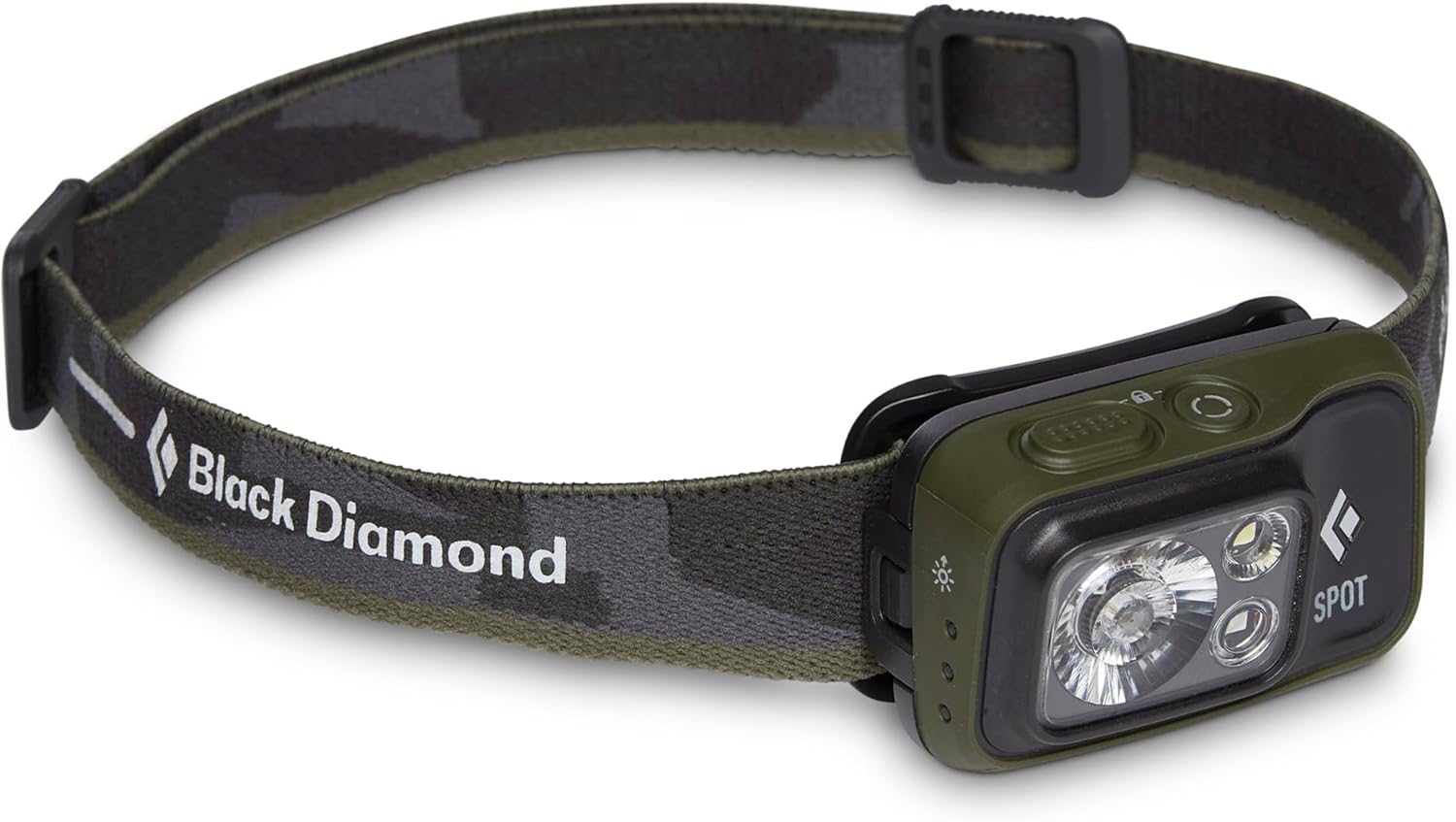
This is the non-negotiable one, and one per person means one per kid too. A shared light means that whoever is not holding it is standing in the dark, which is precisely the situation that makes a seven-year-old decide they hate camping. Headlamps also beat flashlights for kids for a practical reason: hands stay free, and the beam automatically points where they are looking. A cheap multipack covers a whole family for the price of one premium model.
Search light: one bright handheld
One real flashlight with some throw, kept by an adult, does the jobs a headlamp cannot: checking the tree line when something rustles, finding the thing that rolled under the car, walking the loop road, and lighting up a trail sign 60 feet away. You need exactly one of these, not four.
If you are deciding what to actually buy, our lantern vs headlamp vs flashlight comparison breaks down which of the three earns its place first when you are only buying one thing this season.
Red mode is not a gimmick
Nearly every headlamp made in the last decade has a red setting, and most families never touch it. It is worth learning for two reasons. Red light does not collapse your night vision the way white light does, so you can read a map or find a water bottle and still see the campsite afterward instead of standing in a bright tunnel. And it is dramatically less rude: white headlamps at head height beam directly into the faces of everyone at your site and the two sites next to you.
The habit worth teaching kids is simple - red inside the tent and at the table, white only when you are walking or looking for something. It also happens to be the setting that makes stars visible again after five minutes.
Kids and the dark
A campground at night is genuinely darker than anywhere most kids have been. There are no streetlights, no glow from a neighbor's porch, and the tree line disappears completely. Some kids find that thrilling and some find it alarming, and which one you get is only partly predictable.
- Ownership beats reassurance. A kid with their own headlamp and their own switch is in a different relationship with the dark than a kid waiting for an adult to point a light somewhere. This is the whole intervention, most of the time.
- Walk the bathroom route in daylight. Do it once when you arrive, then again right at dusk. Knowing the route is the difference between a two-minute trip and a standoff at 10pm.
- Leave a light on in the tent all night. A small lantern on its lowest setting costs almost nothing in battery and removes an entire category of 2am problem. Do not make this a negotiation.
- Name the sounds before bed. Ten minutes of listening and identifying - that is an owl, that is an acorn on a tent fly, that is someone's car door - converts unexplained noise into a known list.
- Test it in the backyard first. If the dark is likely to be the sticking point, a backyard camping night lets a kid meet a dark tent somewhere with a back door 30 feet away.
What to actually do for four dark hours
"We'll just sit by the fire" is a plan that holds for about 40 minutes with kids under ten. Bring two or three specific things and rotate through them. The reliable shape is one active game, one quiet game, and one sky thing.
- Glow sticks turn ordinary games into night games. Ring toss with a glow bracelet as the ring, hide-and-seek where the hider wears one, capture the flag with two colors of necklace. This is the cheapest high-value item you can put in the bin.
- Headlamp tag and shadow puppets. Beam tag against a tent wall, or shadow shapes cast from a lantern onto the fly, both work with gear you already brought.
- Cards, trivia, or a read-aloud at the table. The wind-down block. A lit picnic table plus a deck of cards is the most-used hour of most fall trips.
- Stargazing, which fall is genuinely better for. Cooler, drier air means steadier viewing, and dark arrives while kids are still awake, which is not true in June. A paper star chart set to your latitude beats a phone screen here, because the phone wrecks everyone's night vision the moment it comes out. For picking a dark site, timing a trip around the moon, and this fall's meteor showers, see stargazing camping with kids.
- The fire, once it is actually built. Kids stay engaged much longer when they have a job at it. If fire-building is still a struggle, the sequence in how to start a campfire is worth reading before you are doing it by headlamp.
Batteries and power in the cold
Cold shortens battery life, and a fall trip runs lights for three or four times as many hours as a summer one. Two habits cover it: charge everything at home the night before, and bring one power bank for the whole family rather than a spare set of batteries for each device. Rechargeable headlamps and a 20,000mAh bank will run a family weekend comfortably.
If your lights take AA or AAA cells, keep the spares in a jacket pocket rather than a bin overnight; cells that spent the night at 35 degrees test noticeably weaker than the same cells kept warm. And put a light in the car and a light in the tent as fixed positions, so that the answer to "where is a flashlight" is never a search.
Bedtime when it has been dark since 5:30
The instinct is to push bedtime later because it feels absurd to be in a tent at 7pm. The better move is to keep your normal bedtime and fill the hours ahead of it, which is what the activity rotation is for. Kids get cold sitting still long before they get sleepy, so the evening tends to end on temperature rather than on tiredness anyway.
Two things make the transition easier. Get everyone into sleep layers before the last activity, not after it, so nobody is changing clothes in a cold tent at the end of the night. And run the last bathroom trip as a group walk with headlamps rather than as individual missions. For the rest of the first-night sequence, our first night camping guide covers the order of operations, and fall camping for beginners covers the sleep system that makes a 35-degree night survivable.
Frequently asked
What time does it get dark when camping in the fall?
Sunset moves from about 8pm in mid-August to roughly 7pm at the late-September equinox and around 6:15pm by late October, then closer to 5pm once the clocks fall back in early November. A July trip leaves two dark hours before bedtime; a late-October trip leaves four or five.
How much light does a family campsite actually need?
Three layers: one lantern hung above head height for the table, a headlamp for every person including every kid, and one bright handheld flashlight for the edges of camp. Buying only a lantern is the common mistake.
What do you do with kids at a campsite after dark?
Plan two or three specific things and rotate: one active game (glow sticks make night versions of everything), one quiet game at the lit table, and one sky thing. The fire alone holds young kids for about 40 minutes.
How do you handle a kid who is scared of the dark at a campsite?
Give them their own headlamp and their own switch, walk the bathroom route in daylight, leave a small light on in the tent all night without negotiating it, and use red mode. A backyard night first makes the dark familiar somewhere safe.