Comparison
3-season vs. 4-season tent: does your family need one?
“Season” ratings are about wind and snow, not temperature. Here’s when the tent you already own is enough for cold nights, and when a 4-season tent earns its keep.
Short answer
Most families only need a 3-season tent. It handles spring, summer, and fall camping, including frosty October and November nights in the 30s, as long as it has a full-coverage rainfly and you stake it out properly. The season rating describes how a tent stands up to wind and snow, not how warm it keeps you. Warmth on a cold night comes from your sleeping bag and an insulated pad, so spend there first. A 4-season tent earns its price when you expect snow on the tent, strong sustained wind, or an exposed site above treeline. It has more poles, steeper walls, less mesh, and a fly that reaches the ground. The tradeoffs are more weight, more condensation, a higher price, and a stuffy tent on warm nights, so it is a poor choice for summer trips.
| 3-seasonColeman Sundome 4-Person | 4-seasonGEERTOP 4-Person 4-Season Tent | |
|---|---|---|
| Built for | Spring, summer, fall | Snow, high wind, exposed sites |
| Walls | Lots of mesh under a rainfly | Mostly solid fabric, little mesh |
| Wind and snow load | Fine in breezes, sags under snow | More poles, steeper walls, snow skirt |
| Airflow and condensation | Breathes well | Stuffier, needs vents open |
| Hot summer nights | Comfortable | Too warm |
| Price | ~$82 | ~$160 |
Prices approximate and subject to change on Amazon. As an Amazon Associate we earn from qualifying purchases.
What “season” actually means
The season label is a promise about structure, not temperature. A 3-season tent is built to keep rain off and air moving. It uses a lot of mesh in the inner tent, a rainfly over the top, and two or three poles. That design breathes well and stays comfortable from May through October.
A 4-season tent is built to stay standing when the weather pushes on it. Extra poles cross in more places, the walls are steeper so snow slides off, the inner tent is mostly solid fabric, and the fly often has a snow skirt that seals against the ground. That makes it stronger and less drafty, but also heavier and stuffier. Neither type heats anything. A tent only slows down how fast warm air leaves.
Not every “4-season” tent is a mountain tent
True expedition tents are built for climbers and cost several hundred dollars for two people. Budget tents labeled 4-season, like the GEERTOP in this comparison, sit in between: aluminum poles, a snow skirt, a full fly, and less mesh than a summer dome. They are a real step up for windy fall weekends and light snow at a campground, but they are not meant for heavy snowfall or a ridge in a storm.
The other catch for families is size. Most 4-season tents top out at four people, and their floor space is tighter than a family dome of the same rating. If you camp as a family of five or six, a sturdy 3-season tent plus a winter-ready sleep system is often the more practical answer.
Which wins for…
Summer and warm early-fall weekends
3-season wins easily. Mesh walls and good airflow are what keep kids from waking up hot and sticky. A 4-season tent on an August night is a sauna.
Frosty October and November nights
3-season still wins for most families. Put the fly on, close the fly vents only partway, and pitch in a sheltered spot. Our fall camping guide covers site choice and layering for nights like these.
Windy sites and open ground
It depends on how often you camp there. A well-guyed 3-season dome handles gusty weekends, and our guide to camping in high wind shows how to pitch it. If you regularly camp on the plains, the coast, or in the high desert, a 4-season tent is a real upgrade.
Snow in the forecast
4-season wins. Wet snow is heavy, and a 3-season tent with a flat roof and mostly mesh can sag or collapse overnight. If you do not own one yet, a heated cabin or yurt is the better first winter trip. Our winter camping guide walks through that choice.
Upgrade the sleep system before the tent
If your family is cold at night, a new tent is rarely the fix. The ground pulls heat out of a sleeper far faster than the air does, and an uninsulated air mattress makes it worse. A closed-cell foam pad like the Therm-a-Rest Z Lite Sol Foam Sleeping Pad (~$60) under each sleeper, a sleeping bag with a comfort rating at or below the forecast low, and dry base layers do more for warmth than any tent.
Our sleeping pad R-value guide explains how much insulation each season needs, and preventing tent condensation covers the wet walls that come with closing a tent up on cold nights.
Frequently asked
Can I use a 3-season tent in the winter?
Yes, at a drive-up campground on a dry, calm night above about 25°F, as long as your sleeping bag and pad are rated for the cold. The tent adds only a few degrees of warmth either way. What a 3-season tent cannot handle is real snow load or strong sustained wind. If the forecast calls for either, switch to a 4-season tent or book a cabin.
Is a 4-season tent warmer than a 3-season tent?
A little, but less than most people expect. Solid fabric walls and a fly that reaches the ground cut drafts, so it can feel 5 to 10 degrees warmer inside on a windy night. It does not make heat, though. Your sleeping bag and the insulated pad under you do almost all of the work of keeping you warm.
Do I need a 4-season tent for fall camping?
Usually not. Most fall family trips land on nights in the 30s and 40s with little wind and no snow, which is exactly what a good 3-season tent with a full-coverage rainfly is built for. Spend the money on a warmer sleeping bag and an insulated pad first. A 4-season tent becomes worth it once you plan to camp in snow or at exposed, windy sites.
Why do 4-season tents get so much condensation?
They have less mesh and tighter fabric so they can hold heat and shed wind, which also traps the moisture from everyone breathing inside. A family of four can put more than a quart of water vapor into the air overnight. Crack every vent, keep the doors partly unzipped when the weather allows, and wipe the walls down in the morning.
See the picks

~$82
Coleman Sundome 4-Person
Best-selling family dome tent. 9×7 ft floor, weatherproof, fits a queen air bed. Sets up in about 10 minutes. Coleman makes the Sundome in 2/3/4/6-person sizes - the price scales with capacity, so pick the size that matches how you want to set up your campsite.
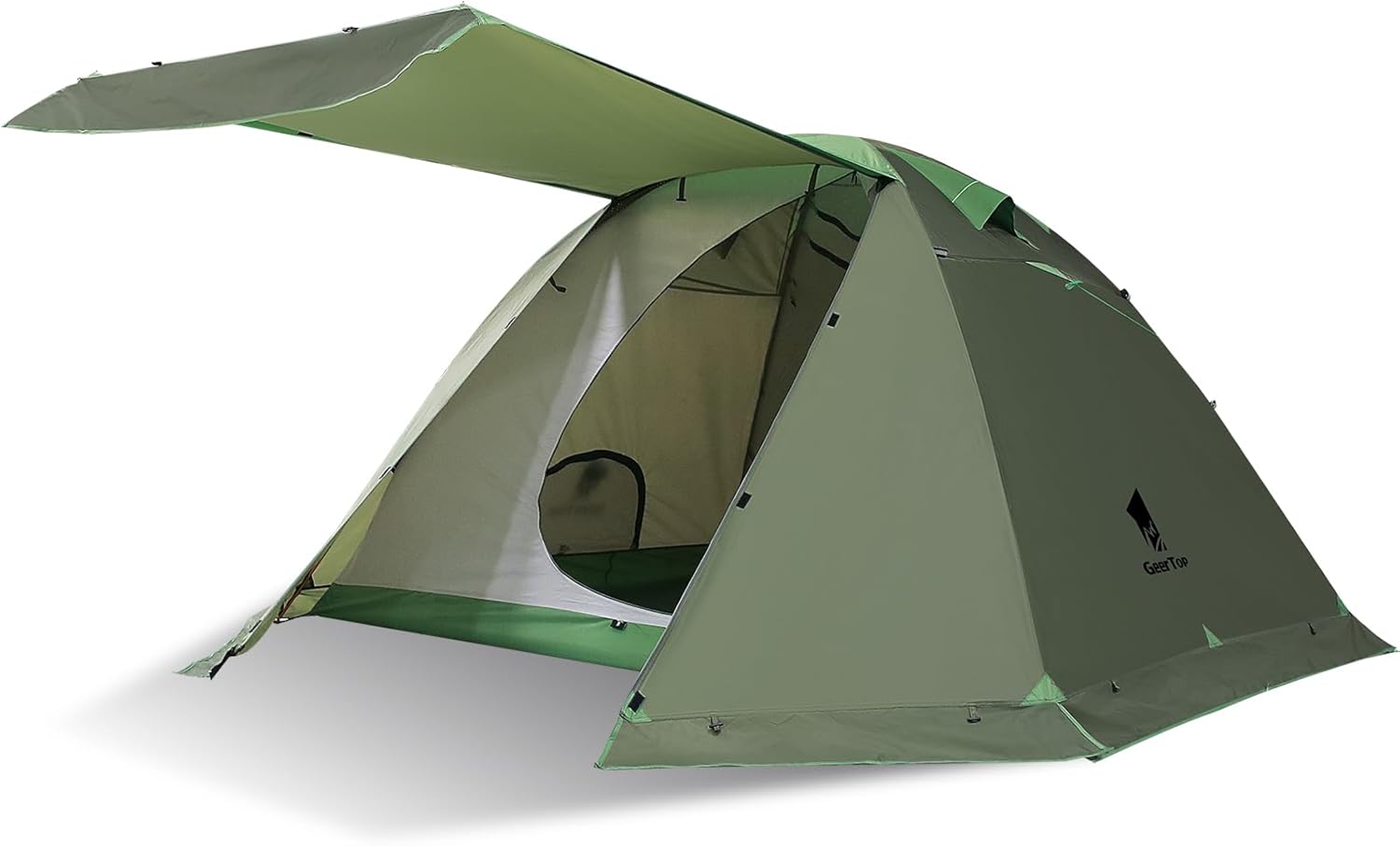
~$160
GEERTOP 4-Person 4-Season Tent
Freestanding double-wall dome with aluminum poles, a snow skirt, full-coverage fly, and a front vestibule. About 7 x 8 ft inside and 9 lbs packed. A budget step into cold-shoulder-season and light-snow camping, not an expedition tent.

~$60
Therm-a-Rest Z Lite Sol Foam Sleeping Pad
Folding closed-cell foam pad with a reflective coating. Cannot pop, doubles as a sit pad, and adds about R 2 of insulation under any inflatable pad or air mattress on a cold night.
Keep going
Planning a cold-weather trip?
The night routine, layers, and small tricks that keep kids warm until morning.
Read how to keep kids warm camping