How-to
Setting Up Camp in the Dark
Between the Friday-after-work arrival and an October sunset, most families end up pitching at least one tent by headlamp. Here is the arrival math, the setup order, and how to light a site so a family can still function after dark.
By William Blacklock · Last updated September 2026


Plan the evening backwards from sunset
Almost every dark-arrival story starts the same way: the family planned forwards. They picked a departure time that felt reasonable, drove, stopped for dinner, and discovered on arrival that the campground had about twenty minutes of light left in it.
Run it the other direction. Look up the real sunset time for the campground on your actual dates, then subtract:
- 90 minutes if it is your first time at that campground, or one of your first few trips with this tent.
- 60 minutes once the family has a routine and the tent goes up without anyone reading anything.
- Another 30 minutes if you are arriving to a first-come-first-served site and still have to choose one, which is a job that gets much worse in low light.
That result is the time your tires need to stop at the site, and every other decision on the drive gets planned against it. Sunset itself is not the deadline either. You get roughly half an hour of usable light after it, and that light is flat and shadowless, which is precisely when a stake gets missed and a guyline goes untensioned.
The daylight math nobody checks in September
The reason this catches families in the fall specifically is that the departure time stops working gradually and then all at once. Sunset slides earlier by a bit over a minute a day through September, then closer to two minutes a day through October at northern latitudes. Neither is noticeable week to week. Then Daylight Saving Time ends on the first Sunday in November and takes a full hour off the evening overnight.
Add it up and most of the country loses more than two hours of evening daylight between mid-September and the week after the time change. The 4pm Friday departure that landed you at a lit campsite in July delivers you into full dark in late October. Check the sunset time for every fall trip as its own number rather than carrying over the summer plan. The rest of the seasonal picture is in fall camping for beginners.
Pre-stage the dark-arrival kit before you leave home
The single highest-value ten minutes of a dark arrival happens in your driveway. If the headlamps are at the bottom of a bin under the cooler, you will be digging through the whole car by phone flashlight before you can start.
Keep these in the passenger cabin, not the cargo area:
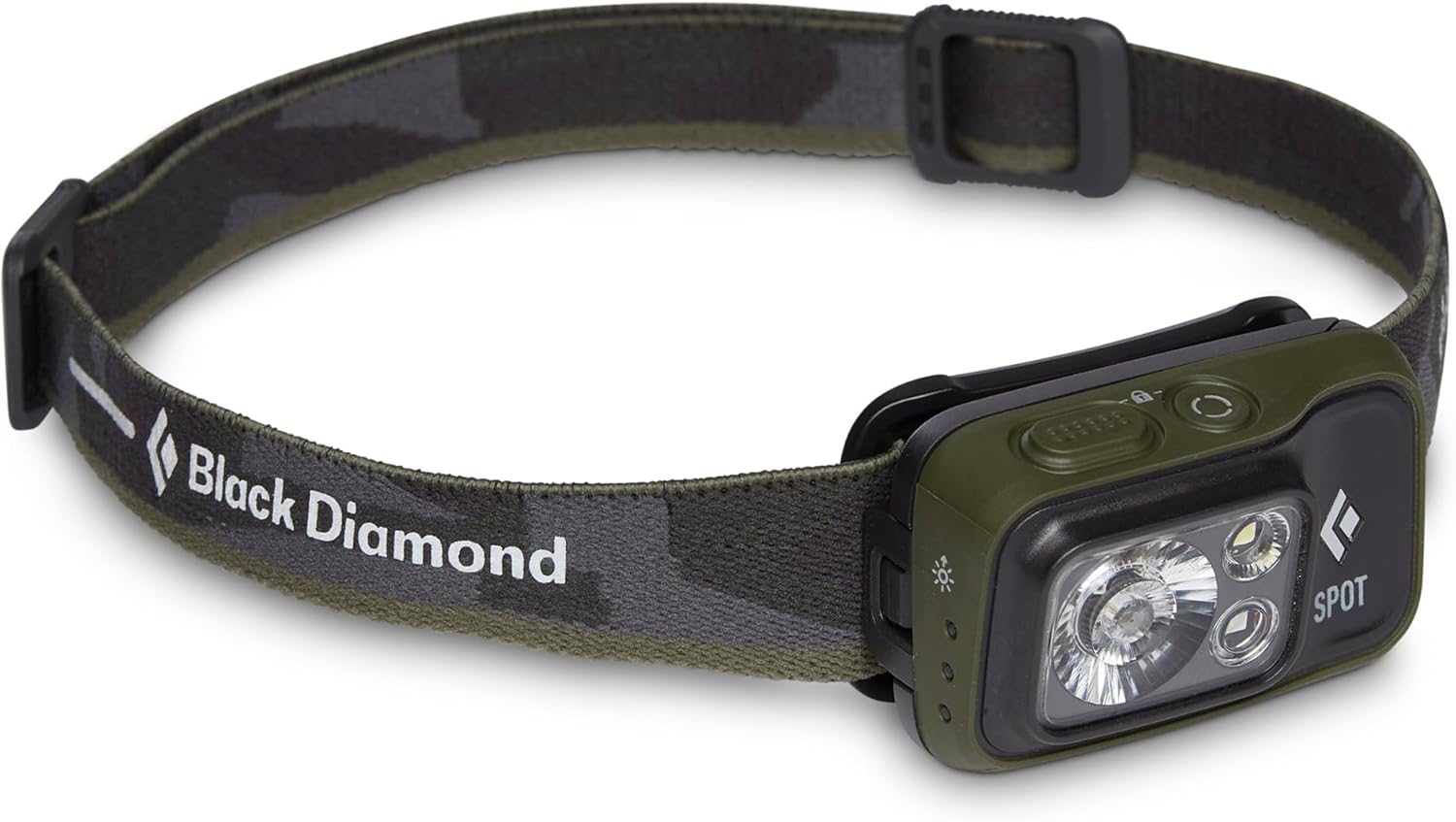
- A headlamp per person, batteries already in. Hand them out before anyone gets out of the car.
- One bright lantern. This is the light that makes the site usable rather than the light that makes one small circle usable.
- The tent, loaded last so it comes out first. Load order is the cheapest planning you will ever do.
- Whatever dinner is, if dinner is not going to be cooked. A dark arrival is a good night to have decided this in advance.
Reflective guyline is worth mentioning here because it solves a problem you only meet in the dark: a standard tan cord is invisible to a headlamp at ankle height, and the person who trips over it is usually a kid heading to the bathroom at 10pm.
Setup order when the light is gone
Do less than you would in daylight, and do it in a strict order. The goal for the night is a standing tent, fed kids, and nothing dangerous left half-finished.
- Park to light the tent pad. Angle the car so the headlights wash across where the tent is going, and use that while you lay out the footprint, poles, and stakes. Switch to headlamps once the shape is up, well before the battery becomes a question.
- Pitch the tent and only the tent. Nothing else gets unpacked until it is standing, staked, flied, and the sleeping bags are inside. This is the one job that gets harder every minute and the only one that can genuinely end the night.
- Give every kid one job. Holding a pole upright, handing over stakes in order, walking the lantern to wherever the adults are working. Kids with a job are not kids wandering an unfamiliar dark campground.
- Cook one pot. A dark arrival is not the night for a three-component meal. See easy family camping meals for one-pot options, or skip the stove entirely with no-cook camping meals.
- Leave the rest for morning. Canopy, chairs, the full kitchen setup, the careful cooler organization: all of it is faster and better in daylight, and none of it is needed before bed.
The one thing that makes all of this dramatically easier is having pitched the tent before, in daylight, when nothing was at stake. If this tent is new, run it once in the yard first. The full walkthrough is in how to set up a family tent, and a backyard camping night is the cheapest possible rehearsal.
Lighting a site so a family can actually use it
Headlamps and lanterns do different jobs, and a family that owns only one of them is missing half of the evening. A headlamp points where you look, which is what you want for hands-on work and for walking. A lantern lights a space, which is what you want for a picnic table where four people are eating.
- One headlamp per person, not a shared pile. A shared light means somebody is always in the dark, and it is usually the youngest person.
- Hang the lantern high. On the table it lights the table and blinds everyone at it. Hung from a tree limb, a canopy frame, or a lantern hook above head height, it lights the whole site and casts useful shadows instead of glare.
- Use the red mode for anything after bedtime. Red light does not wreck night vision or wake the tent next door, and most decent headlamps have it.
- Leave one light on the tent. A small light clipped at the tent door is how a kid finds their way back from the bathroom without a search party.
- The phone flashlight is a backup, not a plan. It eats the battery you may need in the morning and it occupies a hand.
If you are choosing between the two categories rather than buying both, the tradeoffs are laid out in lantern vs headlamp vs flashlight.
Kids and the dark
A campground at night is genuinely darker than anywhere most kids have been. There are no streetlights, no glow from a neighbor's window, and a lot of unexplained sound. Three things reliably help.
Give them control of a light. A headlamp a child can switch on themselves does more than any amount of reassurance, because the fear is usually about not being able to do anything rather than about darkness itself. Cheap multipacks exist specifically so every kid can have their own.
Name the noises out loud. That was an acorn on the rainfly. That is the neighbor's cooler lid. A noise with a name stops being a threat, and a kid who hears an adult identify sounds calmly learns to do it themselves by the second night.
Make the dark the activity. This is the part families underrate. An early sunset in October means real stargazing happens at 7pm instead of 10pm, which is the only time of year it lines up with a kid's bedtime. Glow sticks turn the loop into a game, and a star chart turns a dark sky into something to look for rather than something to endure. If the whole first night is new territory, the first night camping guide covers the rest of the bedtime problem.
What not to do after dark
The short version: nothing that needs a sharp edge, a flame, or a good judgment call.
- Do not split wood or use a hatchet. Depth perception under a headlamp is poor and this is where the serious camping injuries come from.
- Do not build a first fire in an unfamiliar site. You cannot see the overhead branches, the ring condition, or how close the tent really is. A stove cooks dinner faster anyway. Save the fire for tomorrow with how to start a campfire.
- Do not let anyone walk the loop without a light. Cars still arrive late, and drivers are looking for site numbers rather than for a child.
- Do not leave food out because it is too dark to deal with. Fall is exactly when animals are eating hardest. Everything goes in the car or the bear box before bed, wrappers included.
Frequently asked
What time should we arrive at the campground to set up before dark?
Take the real sunset time for that campground and date, then subtract 90 minutes for a first visit or 60 once you have a routine. That is when the tires need to stop, and usable light fades about half an hour after sunset.
How do you set up a tent in the dark with kids?
Park so the headlights light the tent pad, pitch the tent before touching anything else, and give each kid one specific job. Practice the tent once in daylight first so the dark version is a repeat, not a first attempt.
How much daylight do you lose in the fall?
More than two hours of evening daylight between mid-September and the week after the time change, which falls on the first Sunday in November and takes an hour off in a single night.
What if a kid is scared of the dark at the campground?
Give them their own headlamp and let them control it, set the tent up before full dark so it feels like theirs, and name the noises out loud as they happen. Most first-trip fear is unexplained sound rather than darkness.