How-to
How to Pitch a Tent on Uneven Ground or a Slope
Perfectly flat tent pads are rare. Most family campsites tilt a little, hide a few rocks, or dip in the middle, and a kid who slides into the tent wall at 2am is the result. Here is how to read a site, set the tent on it, and fix the small tilt that remains.

By William Blacklock · Last updated November 2026


Walk the site before you unpack
Most uneven-ground problems are solved in the first five minutes, before a single pole is out of the bag. Walk the whole campsite and look at where water would run, where the ground is flattest, and what is overhead. If the campground has several tent pads, the flat one is usually the pad that has been used the most, and it is worth taking. The full site-picking checklist is in how to choose a family campsite.
Then do the test that matters. Lie down on the spot where the tent floor will go, the way you will sleep. A tilt you cannot see from standing is often easy to feel from the ground. Roll once to each side. If you roll easily, the site is too sloped and you should keep looking.
Pick the high, flat spot, not the low one
Cold air and rainwater both flow downhill and settle in the lowest ground. A shallow bowl, a dry creek bed, or the base of a hill can mean a colder night and a damp tent floor, even if it looked like the most level patch. Choose ground that is flat and also slightly higher than its surroundings so water has somewhere to go. Below a hillside is the worst place to be when it is raining, and a rainy forecast makes this the first thing to check. Our rainy camping trips guide covers what else to do when the forecast turns.
Higher ground is not always better. A bare hilltop gets the wind, and a tent in a gale is a bigger problem than a slight tilt. Look for a spot that is a little raised, with some cover on the windward side. See camping in high wind for how to pitch when it is gusty.
Clear the ground without digging
Walk the tent footprint and remove rocks, sticks, pinecones, and acorns by hand. A small pebble feels like a baseball under a sleeping child. Set what you moved to the side and put it back when you leave. Do not dig out a high spot or build up a low one, and do not dig a trench around the tent. Many campgrounds and parks prohibit it, and it damages the site for the next family.
A ground tarp or footprint goes under the tent to protect the floor from rough ground, but it should be slightly smaller than the tent floor so the edges do not stick out and collect rain. A GEERTOP 17×10 ft Camping Tarp cut or folded under the tent works well for this and also gives you a dry place to sit while you set up.
Point heads uphill and the door across the slope
If a slight slope is unavoidable, use it. Lay the tent so that everyone sleeps with their head uphill and feet downhill. Sleeping with your head lower than your feet is uncomfortable and makes for a poor night. The next best choice is lying across the slope, though you will tend to roll toward the low side.
Put the door across the slope, not at the downhill end. That keeps shoes and gear from rolling out each time the zipper opens and keeps the doorway from becoming a water channel. Heavy bags and the cooler go at the low end inside, where their weight holds the pad in place.
Stake the downhill side first
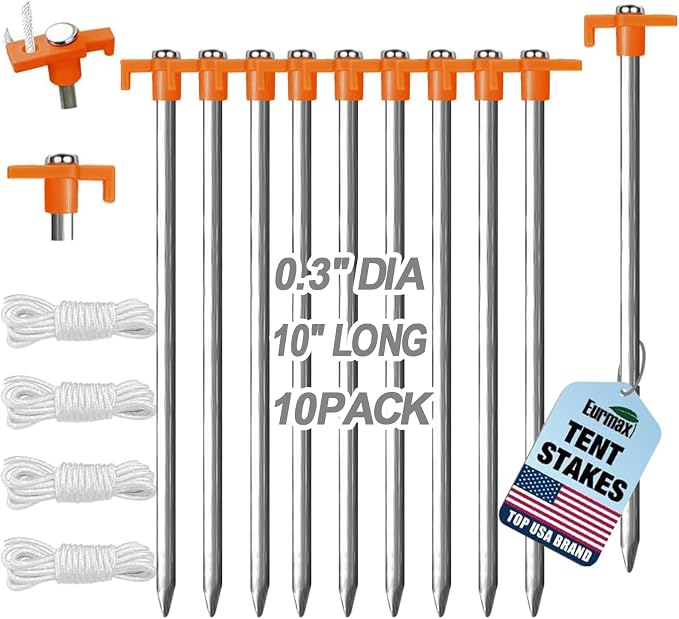
Spread the tent floor out, then stake the downhill corners first. They take the most strain on a slope, and a floor that is pegged on the low side stays put while you pull the high side taut. Drive stakes at about a 45 degree angle pointing away from the tent so the pull is against the stake, not along it. On hard, rocky ground, a Eurmax Galvanized Steel Tent Stakes, 10-Pack holds better than the thin stakes that come in the bag. The full pitching sequence, from laying out the floor to the rainfly, is in how to set up a tent.
Once the tent is up, walk around and check that the floor is not bunched or pulled to one side, then re-tighten the guy lines on the side that faces the wind.
Fix a small tilt inside the tent
A tilt of a few inches is manageable. The fix is inside the tent, not underneath it. Put a folded jacket, a flat stuff sack, or a small towel under the low edge of each sleeping pad to bring it level, or turn the pad so the long edge runs across the slope. For kids who sleep on the floor, the shim goes under the pad, not under the child.
The second problem is sliding. Nylon tent floors and smooth pads are slippery, and a slight slope lets a pad creep downhill all night. A thin sheet of rubber shelf liner or a wool blanket under the pad grips well. A wide pad such as the Big Agnes Divide UnInsulated Pad gives a kid more room to stay on it. Insulation matters here too, since the pad is what separates a kid from cold ground. Our sleeping pad R-value guide explains how to choose one.
When to move instead of fixing it
Some sites cannot be saved, and that is fine. Move the tent, or the whole camp, if:
- You roll easily to one side when you lie down on the floor spot.
- The tilt is more than a few inches across the tent floor.
- The ground dips in the middle or is a drainage channel or creek bed.
- There are dead branches overhead, since uneven ground often means older trees.
- Rain is forecast and the tent would sit lower than the ground around it.
If you arrive late and the best spot is poor, take it for the night and do the in-tent fixes above. Our guide to setting up camp in the dark has the shortcuts for a late arrival.
Frequently asked
Which way should your head point when camping on a slope?
Uphill. It is more comfortable and keeps you from sliding into the tent wall. Put the door across the slope so gear does not roll out when you open it.
How do you level a tent site without digging?
Do not dig. Clear rocks and sticks by hand, choose the flattest spot, and shim under the low edge of the sleeping pad with a folded jacket or a stuff sack. A tilt of more than a few inches means it is time to move.
Why does my sleeping pad slide around in the tent?
Nylon floors are slippery. Put rubber shelf liner or a wool blanket under the pad, and keep heavy gear at the downhill end. If it still slides, the slope is too steep.
Is it bad to camp in a low spot?
Yes. Cold air and rainwater settle in dips, so a hollow means a colder, wetter night. Pick ground that is flat and slightly higher than what is around it.