Cold-weather how-to
How to Keep Phones and Batteries Warm While Camping
Cold drains phones, power banks, and headlamps faster than most families expect. Here is why it happens, where to keep your batteries overnight, and the simple battery plan for a winter trip.

By William Blacklock · Last updated November 2026



Why cold drains batteries so fast
Every battery makes power through a chemical reaction, and that reaction slows down as the battery gets cold. A lithium-ion phone battery at 25°F simply cannot deliver power as easily as it can at 70°F. The phone reads that as a low battery, so the percentage falls fast, and many phones shut themselves off near freezing even when they show 30 or 40 percent left.
The good news is that most of the loss is temporary. Warm the battery back up and much of the charge returns. That is why the whole strategy below is about keeping batteries warm before they get cold, rather than trying to revive them afterward. It is the same idea as the layering and sleep-system advice in winter camping for beginners, just applied to your gear.
Carry the phone close to your body
During the day, the phone belongs in an inside chest pocket of your jacket or a zipped pocket in a mid layer, where your body heat keeps it warm. A backpack side pocket, a stroller cup holder, or the picnic table at camp can drop a phone to the outside temperature in under an hour.
Take it out for the photo or the map check, then put it straight back. Kids who carry their own phone or a small camera need the same rule, and a jacket with a real inside pocket makes it easy to follow.
Bring batteries into the sleeping bag at night
The coldest hours of a trip are between 2am and sunrise, and that is exactly when a phone left in a tent pocket or the car loses the most. On any night forecast near or below freezing, put the phone, the power bank, and any spare headlamp batteries in a small stuff sack or zip bag and keep it inside your sleeping bag.
Keep the bag up near your chest or tucked against your side, not under your hips or down by your feet, where it gets crushed or ends up in the coldest corner of the bag. One adult can be the keeper of the family electronics bag, which also means nothing gets lost in the dark.
Charge smart: warm first, then plug in
Charging a lithium-ion battery while the battery itself is below freezing can damage it permanently, and many phones and power banks will refuse to charge or charge very slowly in the cold. The habit that avoids all of it is simple: warm the device first, then plug it in.
The best time to charge is overnight inside the sleeping bag, with the power bank and phone both warm in the same bag. A power bank with a built-in cable, like the Anker Zolo 20,000mAh, is easy to manage in the dark because there is one less cable to lose. At that size it can top off a couple of phones and a rechargeable headlamp over a weekend. Charge everything to full at home and again in the car on the drive in.
If you have an electric site, an outlet takes most of the pressure off, and our guide to tent camping at an electric site covers the cord and adapter you need to run power safely into camp. Never idle the car in a closed garage or with snow blocking the tailpipe just to charge devices.
Headlamps and lanterns: lithium beats alkaline
Headlamps are the battery problem families notice first, because winter nights are long and the lights run for hours. Alkaline AA and AAA batteries lose a big share of their output in the cold. Lithium disposables hold up far better, and rechargeable headlamp packs are a good option too as long as you keep them warm before charging.
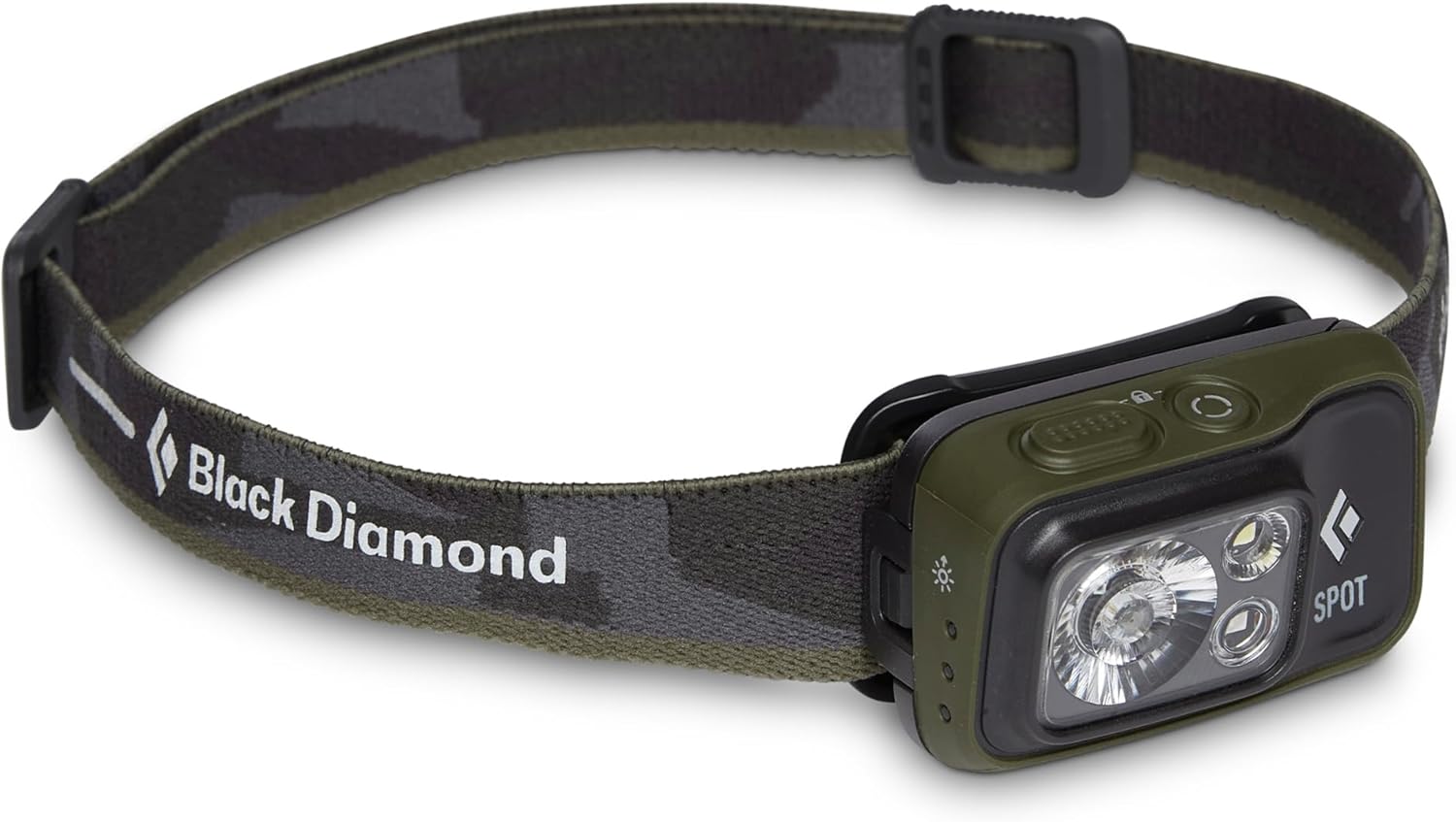
A headlamp like the Black Diamond Spot 400 can run on AAA batteries or a rechargeable pack, which gives you a backup plan if one runs flat. For kids, a multi-pack such as the EverBrite 5-pack means a spare light is always in the bin. Keep spare batteries in a pocket, not loose in a cold gear tote, and swap a dim battery for a warm one rather than throwing it away: once it warms up, it often has plenty of life left.
A lantern that charges from the sun or USB, such as the LuminAID solar lantern, is a useful extra on short winter days. Charge it in the sun during the afternoon, then bring it into the tent or sleeping bag before the temperature drops.
Use hand warmers carefully
Air-activated hand warmers like HotHands are a handy way to keep a pocket of electronics warm, especially for a phone you use for maps or photos on a winter hike. Drop one in the same pocket or stuff sack as the phone, with a layer of fabric between them.
Do not tape or rubber-band a warmer directly to a phone or power bank, and do not seal one inside a tight phone case. Batteries do not like being too hot any more than too cold, and a warmer pressed against the case for hours can get the battery hotter than you want.
Stretch the charge you have
- Turn on airplane mode or low power mode whenever you do not need a signal. Weak signal in the backcountry drains a phone fast as it hunts for a tower.
- Download offline maps and trail info at home so you are not loading maps in the cold.
- Turn screen brightness down and close apps running in the background.
- Use a real headlamp instead of the phone flashlight. It is brighter, hands-free, and does not eat the battery you need for photos and emergencies.
- Pick one phone in the family to keep as the reserve, fully charged and turned off, in case you need to call for help.
Water has the same problem, and the fix is similar. See how to keep water from freezing while camping.
Watch out for condensation
A very cold phone brought straight into a warm, humid car or cabin can collect moisture, the same way glasses fog up when you walk indoors. Before you bring cold electronics into the warmth, put them in a zip bag and let them warm up slowly inside it. The moisture forms on the outside of the bag instead of inside the device.
A simple battery plan for a winter weekend
- Charge every phone, power bank, and rechargeable headlamp to full the night before.
- Pack lithium spares for any headlamp or lantern that takes AA or AAA batteries.
- Give one adult the family electronics bag, and make it go into a sleeping bag at bedtime.
- Charge only when devices are warm, ideally overnight inside the sleeping bag.
- Keep one phone in reserve, charged and off, for emergencies.
If the forecast is in the 30s or 40s rather than deep winter, the same steps still help. Our guide to camping in 30 and 40 degree weather covers the sleeping setup that keeps the rest of the family as warm as the batteries.
Frequently asked
Why does my phone die so fast when camping in the cold?
Cold slows the chemistry inside lithium-ion batteries, so the phone drains faster and can shut off near freezing while still showing charge. Much of that charge comes back once the phone warms up.
Should I sleep with my phone and power bank in my sleeping bag?
Yes. Keep them in a small bag near your torso inside the sleeping bag, so they start the morning warm and fully usable.
Can you charge a power bank or phone below freezing?
Do not charge a lithium-ion battery while it is below freezing, since that can damage it. Warm the devices in a pocket or the sleeping bag first, then plug in.
Are lithium or alkaline batteries better for headlamps in winter?
Lithium. Alkaline cells lose much of their output in the cold, while lithium AA and AAA batteries keep working. Keep spares warm in an inside pocket.

