Comparison
Down vs. synthetic sleeping bag: which fill wins for families?
Two bags with the same temperature rating can behave very differently once a tent gets damp or a kid spills cocoa. Here’s what the fill actually changes, and which one to buy before cold-season trips.
Short answer
Synthetic wins for most car-camping families. A synthetic bag keeps most of its warmth when it gets damp from condensation, wet ground, or a spilled drink, it goes straight into a home washing machine, and it costs roughly a third of a down bag with the same temperature rating. Those three things matter more with kids than saving a pound of weight in a car trunk. Pick down instead when weight and packed size genuinely matter, such as backpacking, a small car packed to the roof, or cold, dry climates, and when the sleeper is an adult or older kid who will keep the bag dry and use it for a decade. Whichever fill you choose, match the temperature rating to your coldest expected night, add a warm sleeping pad, and store the bag loose rather than in its stuff sack between trips.
| DownKelty Cosmic 20 Down | SyntheticTETON Trailhead 20 | |
|---|---|---|
| Temp rating (these picks) | 20°F | 20°F |
| Warmth when damp | Poor - down clumps and goes flat | Good - keeps most of its loft |
| Weight for the warmth | Lighter | Heavier |
| Packed size | Small - compresses tightly | Bulky - takes more trunk space |
| Washing | Special down soap, long tumble dry | Home washer and dryer, low heat |
| Lifespan with care | 10+ years | Several years before loft fades |
| Price | ~$190 | ~$65 |
Prices approximate and subject to change on Amazon. As an Amazon Associate we earn from qualifying purchases.
How each fill keeps you warm
Both fills work the same way: they trap still air close to your body. The more loft the fill has, the more air it traps and the warmer the bag. Down is the soft under-feathers of ducks or geese, and it lofts up enormously for its weight. That’s what “fill power” measures: a 550 fill power bag like the Kelty Cosmic is solid mid-range down, and backpacking bags go up to 800 or more.
Synthetic fill is polyester fiber spun to mimic that loft. It needs more material to trap the same amount of air, so a synthetic bag is heavier and bulkier at the same rating. The tradeoff runs the other way when water shows up: down clusters soak up moisture and collapse, while synthetic fibers hold their shape and keep insulating.
That moisture point matters more in fall than people expect. Cold nights mean heavy condensation inside the tent, and a bag that touches a wet tent wall all night can lose real warmth by morning if it’s down.
Which wins for…
Kids and toddlers
Synthetic wins clearly. Spills, muddy feet, and nighttime accidents happen, and a synthetic bag can be washed at home and dried the same day. Kids also outgrow bags, so the lower price stings less. Our kids’ sleeping bag guide covers sizing and temperature ratings by age.
Damp or rainy climates
Synthetic wins. In the Pacific Northwest, the Southeast, or any fall trip with rain in the forecast, a fill that keeps working when damp is worth the extra bulk. See our rainy camping guide for keeping the inside of the tent dry in the first place.
Packing a full car
Down wins. Four synthetic 20°F bags take up a surprising amount of trunk space. If you’re already playing cargo Tetris with a cooler, tent, and stroller, down bags for the adults can free up real room.
Long-term value for adults
Down wins, if you’ll keep it dry. A well-cared-for down bag can stay lofty for well over a decade, so the higher upfront price evens out for a parent who camps several times a year. A synthetic bag is the better bet if you’re not sure camping will stick.
Making either bag work on a cold night
- The pad matters as much as the fill. Any bag gets crushed flat under your body, so the ground pulls heat from below. An insulated pad does that job, not the bag.
- Read the rating as a limit, not a comfort level. Most people sleep comfortably about 10 to 15 degrees above a bag’s number, and kids and cold sleepers need more margin.
- Keep down away from tent walls. Push the bag toward the middle of the tent and vent the tent so condensation stays off the fabric.
- Store both loose. Hang the bag or keep it in a large cotton storage sack at home. Living in a compression sack is what wears out loft fastest.
For the full layering, hot-water-bottle, and bedtime routine, see how to keep kids warm camping.
Frequently asked
Is a down sleeping bag warmer than a synthetic one?
Not at the same temperature rating. A 20°F down bag and a 20°F synthetic bag are built to keep you about equally warm. The difference is that the down bag reaches that warmth with less weight and packs much smaller. Where synthetic pulls ahead is when the bag gets damp, because synthetic fibers keep most of their loft and down clumps and goes flat.
What happens if a down sleeping bag gets wet?
Wet down collapses into clumps and loses most of its insulating loft, so the bag stops keeping you warm until it is fully dried, which can take a day or more and is hard to do at a campsite. Water-resistant treated down and a DWR shell help with condensation and light moisture, but they will not save a bag that gets soaked by a leak or a spill.
Which is better for kids, down or synthetic?
Synthetic, for most families. Kids spill drinks, drag bags across wet ground, and have the occasional nighttime accident. A synthetic bag shrugs off dampness, goes straight into a home washing machine, and costs a fraction of a down bag that a child will outgrow in a few years.
How long does a down sleeping bag last compared to synthetic?
Down lasts longer with good care. Quality down can keep its loft for well over a decade if it is stored loose and kept clean, while synthetic insulation slowly breaks down each time it is compressed and usually feels noticeably flatter after several years of regular use. Storing either bag uncompressed slows that loss.
See the picks

~$65
TETON Trailhead 20
A 20°F synthetic microfiber mummy bag with a draft tube and roomy footbox. Keeps insulating when damp, survives the washing machine, and costs about a third of a down bag with the same rating.
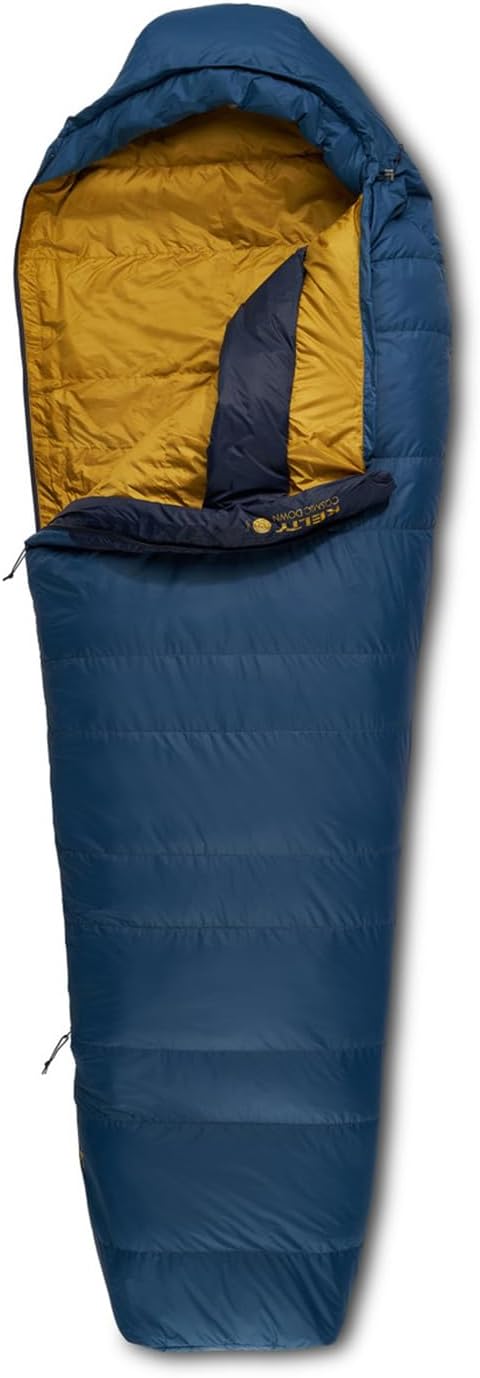
~$190
Kelty Cosmic 20 Down
A long-running 20°F mummy bag filled with 550 fill power down and a water-repellent shell. Packs much smaller and lighter than a synthetic bag of the same rating; keep it dry and it lasts for years.
Keep going
Build the whole sleep setup.
Bag, pad, and pillow picks in three tiers, from a summer budget combo to a cold-weather upgrade.
See the sleeping system picks